Part II of musings on waiting. The first one can be read here: “On Waiting and Wakefulness”.
A whole year. I wasn’t supposed to mess with the jar’s contents for an entire year apart from occasionally checking for mold. I was assured that making miso is actually quite simple and would result in a taste different from store bought so long as you were willing to wait. They were largely right as fast forward to exactly a year later, after a laughably simple process of tightly packing in mashed soybeans, koji, and salt into a shochu-washed jar, I was rewarded with an ochre mixture of such depth that couldn’t fully be described by the words “nutty” and “salty” alone. Wet wood, an old book, the brown bits in pan drippings, soy sauce toffee, yogurt ice cream. Whole beans would surface here and there, adding character, and as the jar continued to sit in my fridge, the flavor too changed, darkening and becoming more caramel-like. The making was easy enough indeed. It was the waiting that wasn’t.

Yes yes I know that waiting is part of it and time is the most important ingredient in miso. There are enough out there extolling the virtues of patience. I have nothing new to add to their pile of words. No platitude on the nobility of patiently waiting through that which we have no control over. No meditation by way of miso. In fact, I find it quite annoying when those who’ve hardly had to suffer an interminable wait tell me to “just have patience” so instead, I’ll offer a few musings on what keeps me from losing my wits when the waiting seems without end. A way to find some richness in life even if all you want to do is break open the jar before it’s ready.

One of the worst feelings during a long and uncertain wait is this contradictory sort of “rushed stuckness” . Like the world around you is frozen in place and yet you have this simultaneous bodily sensation that you’re careening breathlessly through air. You’re staying put and the streets look the same but you breathe as if speeding facefirst into the wind: short, shallow, muscles tensed like you want to rip out of your own skin. It’s a disorienting sensation where what you see through your eyes is almost the opposite of what you feel in your body.
I’ve found it helpful to think of “waiting” then as two simultaneous experiences: an outer one marked by stillness where nothing seems to change and an inner storm where an extreme version of antsyness buffets your innards like a ragdoll. The trick is to generate as much movement outside so as to break the stillness while finding something visible to latch on to that in the blur of movement you’re reminded that you’re still here. You endure. The jar of miso is still waiting in the fridge.
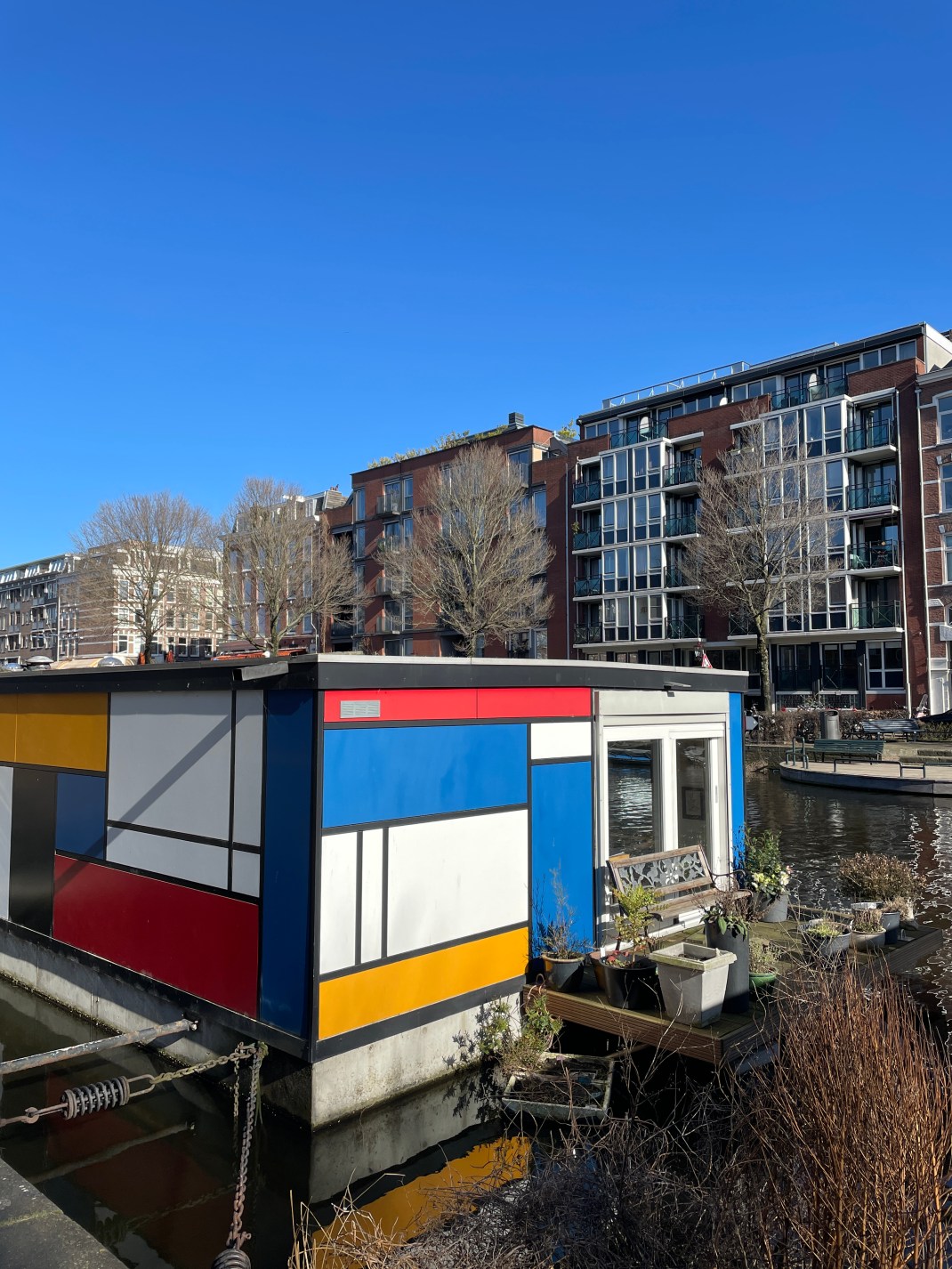
I spotted the first Mondrian painted on the side of a houseboat on a clear winter day in Amsterdam. Blocks of red, yellow, blue, and white framed by a blue sky and black canal water. I was reminded of an old memory from a high school art class many years ago on a hilltop in Wisconsin when we were shown a dusty book with pictures of his abstract art. I would spot it several more times over the years as I ran through a haze of places, unable to sit still but stuck having to wait:
….the glass ceiling of a covered walkway…

…a set of doors…

…wall art at a friend’s sparsely decorated flat…
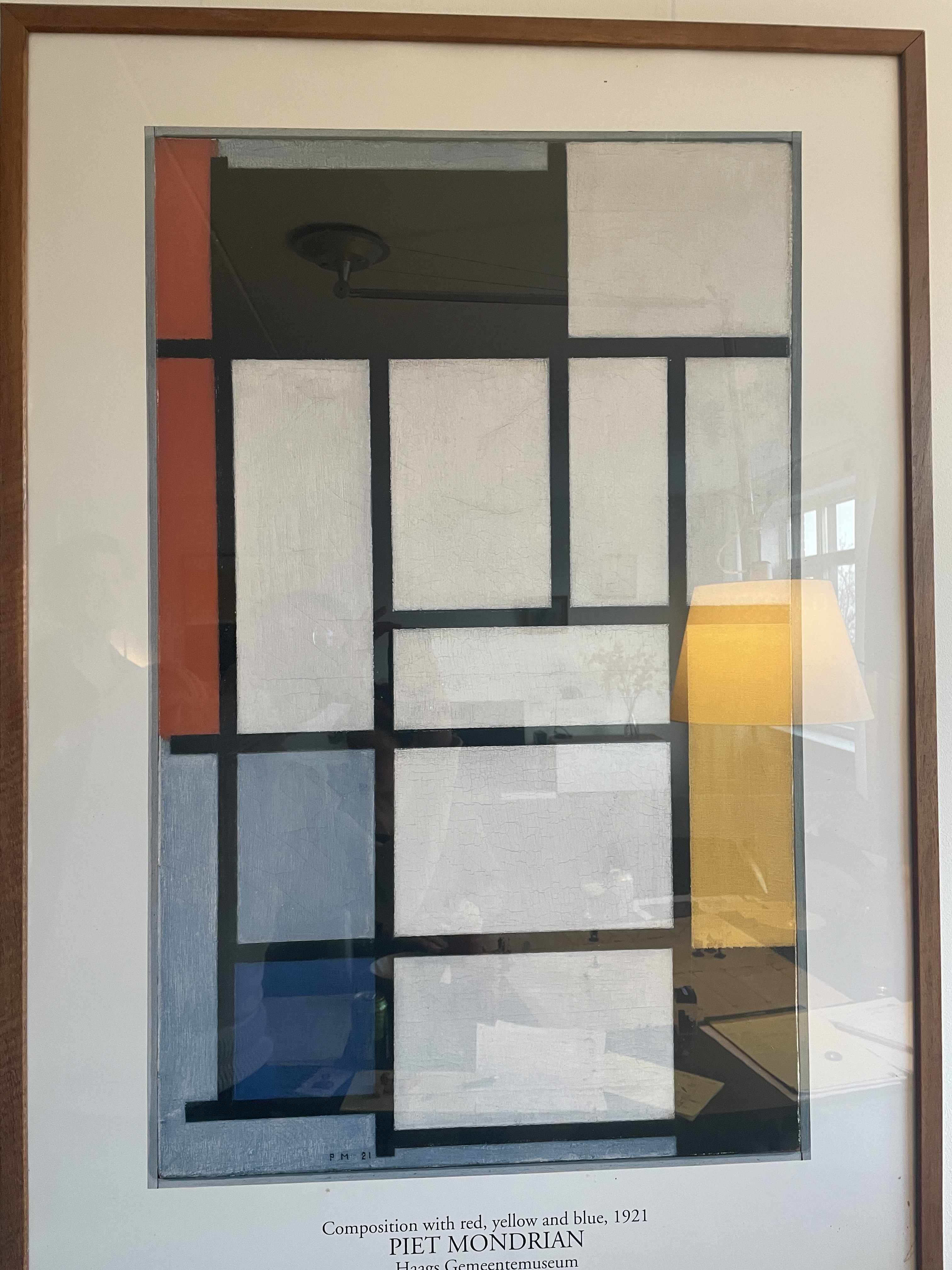
…a dress…

…on entire buildings’ facades…
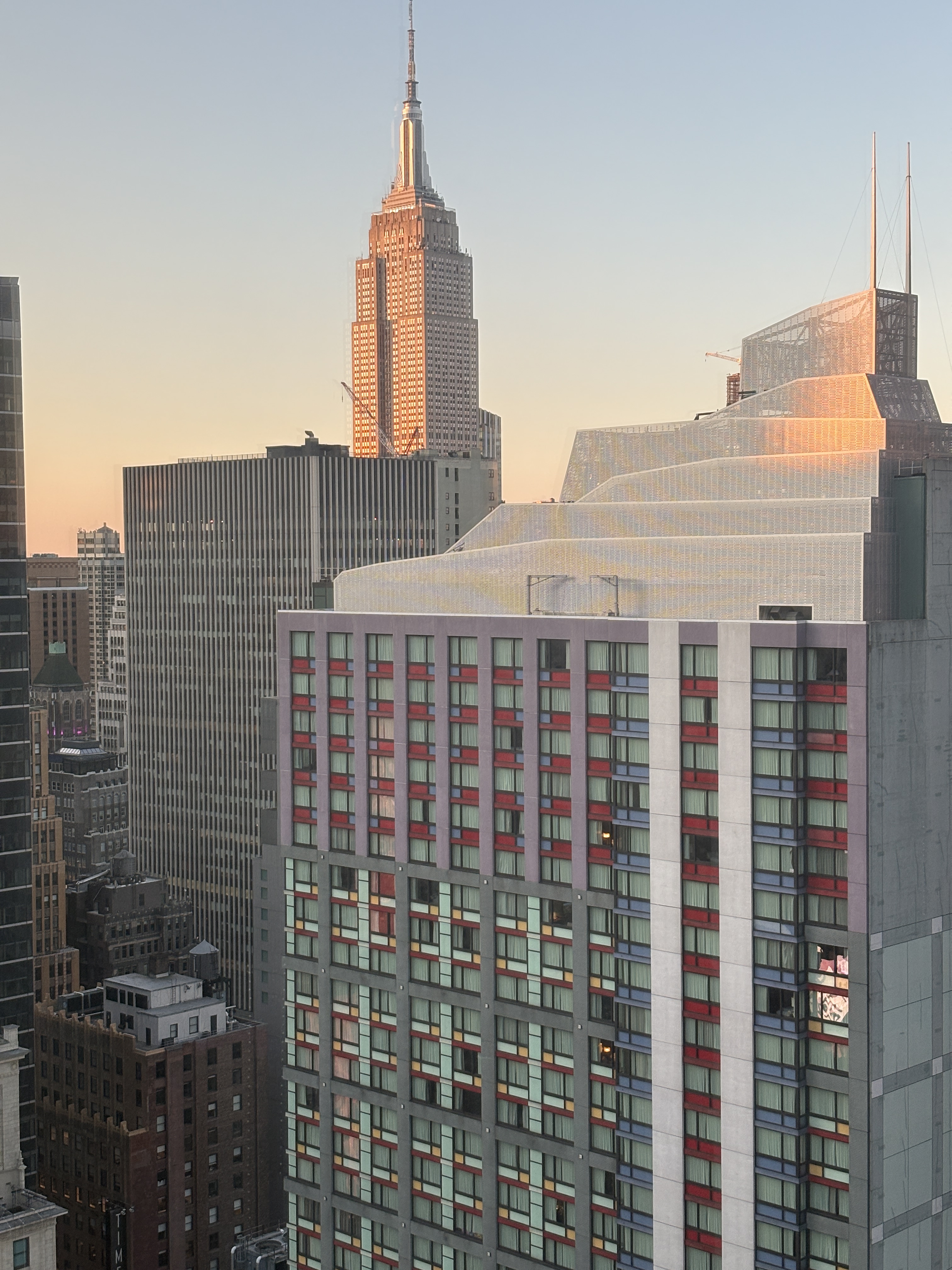
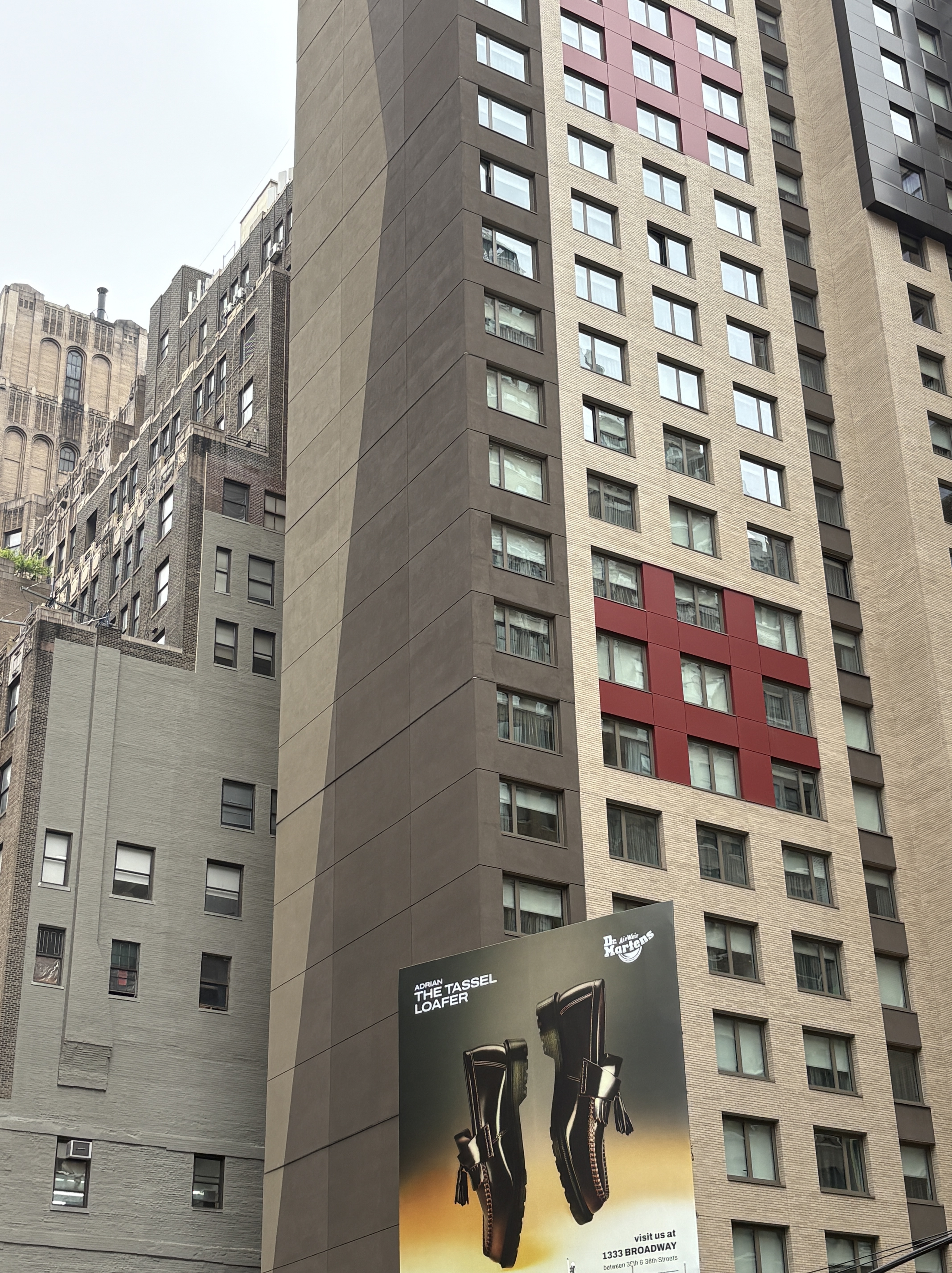
…on the bike ride home…
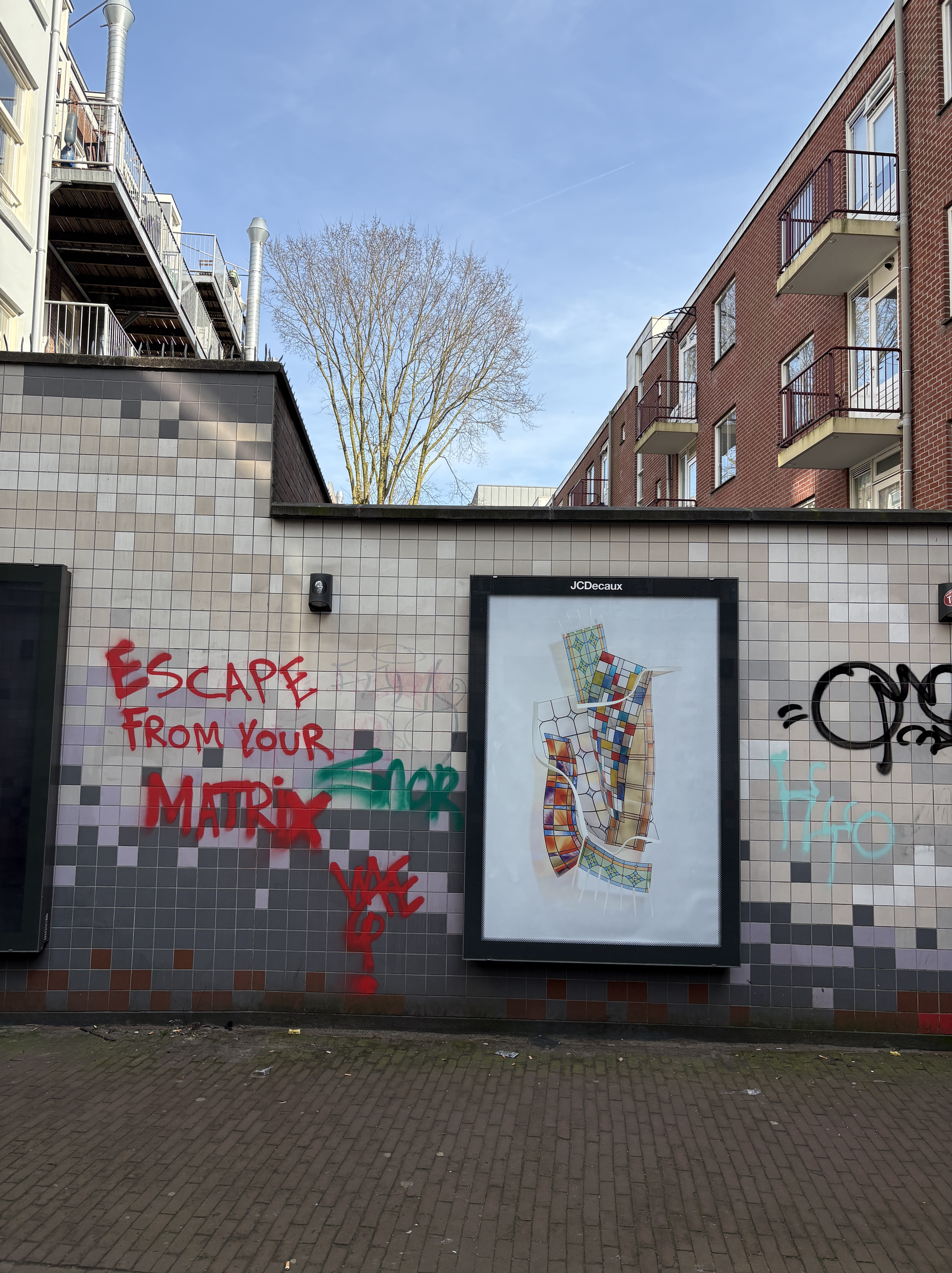
…even a pizza oven on a touristy thoroughfare in Tropea.
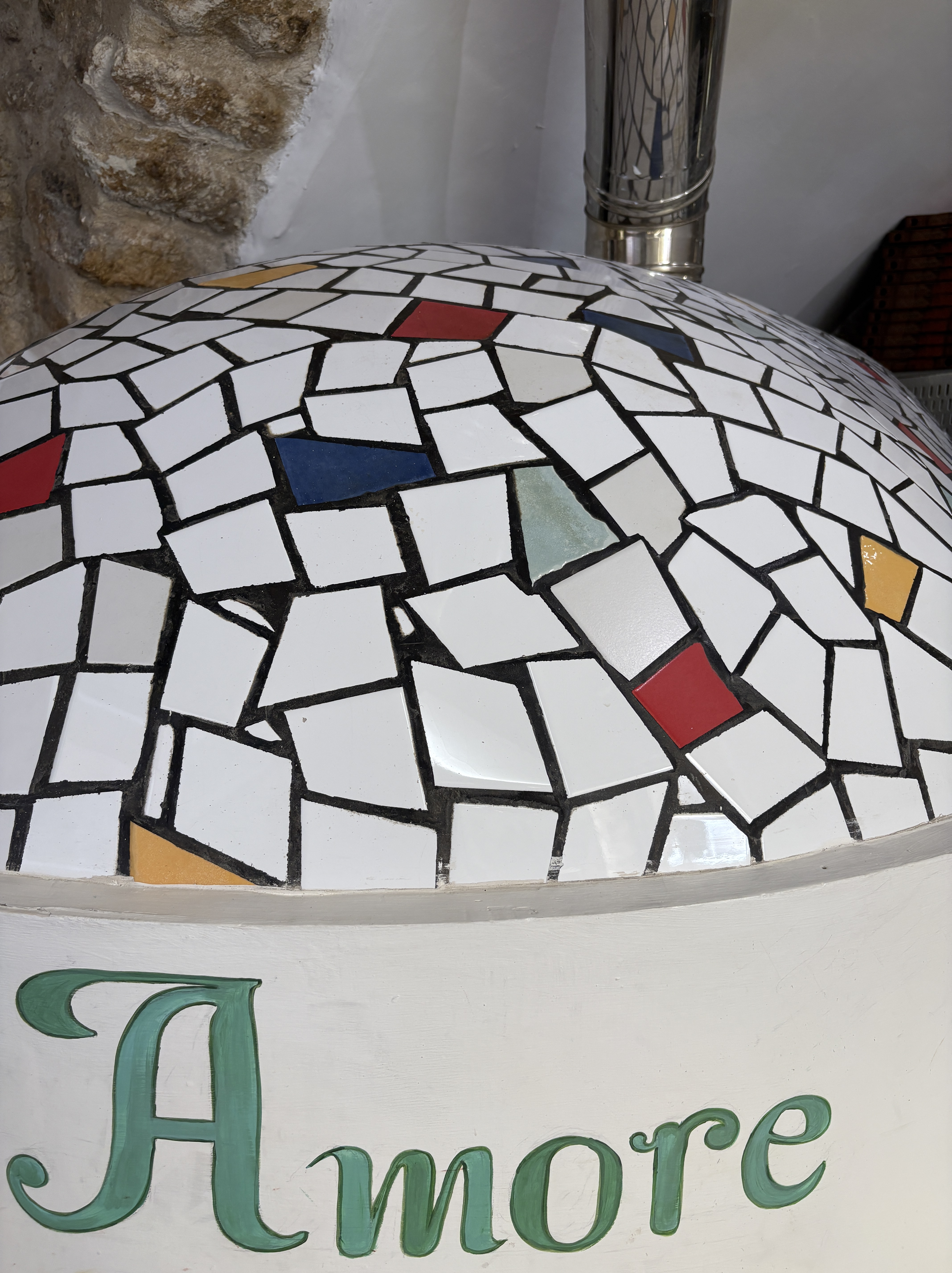
Each time, a remembrance that helped more than simply anticipating the reward at the end of the wait:
“From the last Mondrian to this one, things have happened. Even if outside things look stuck, I’m moving. Even if inside it feels like I am hurtling uncontrollably through empty space, there are anchors in the form of red, yellow, blue, and white, framed by blue sky and black water. From the last one to this one, I am still here. I endure.”
 The Errant Diner