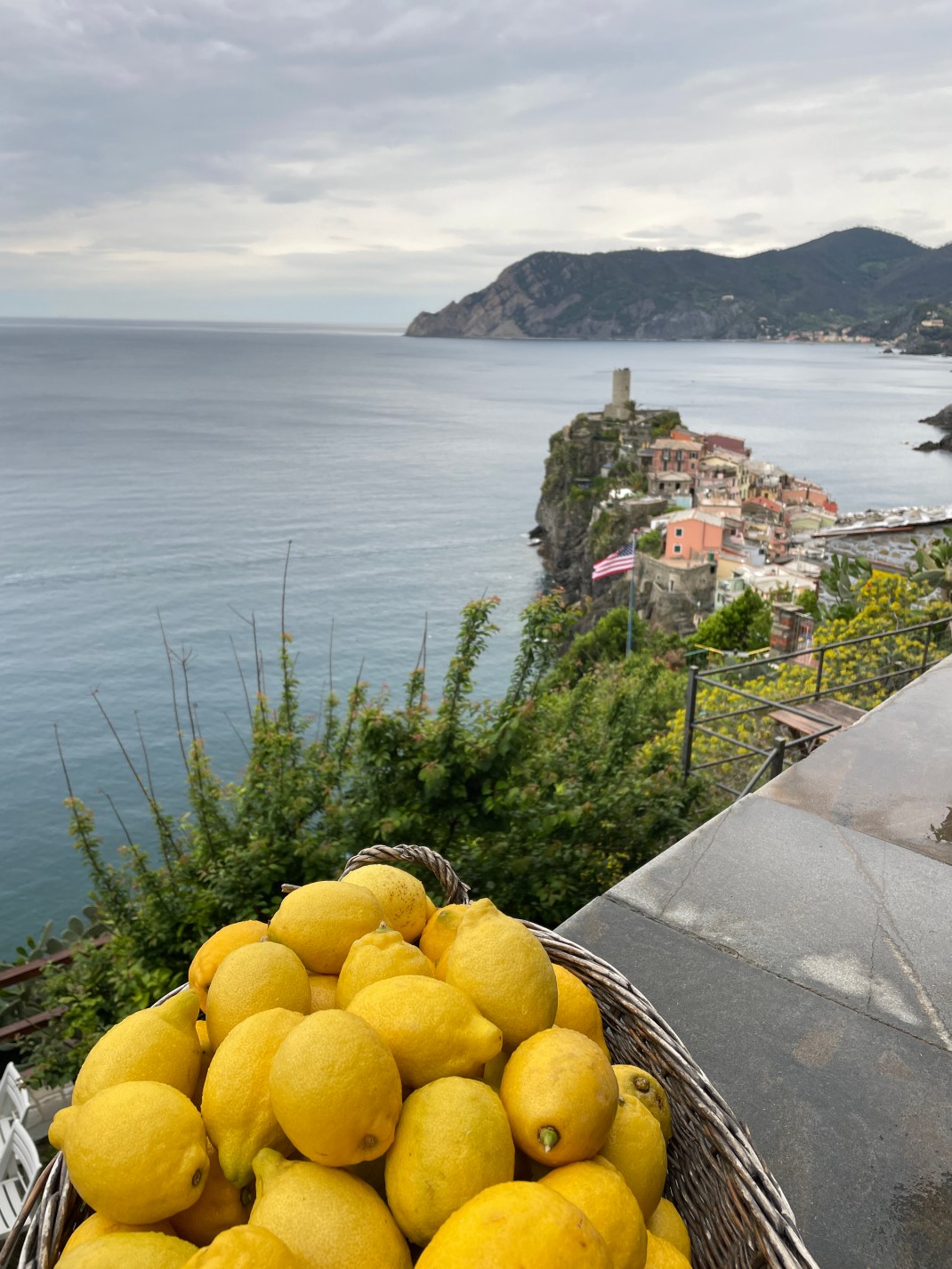
What is a Lemon?
For most English-speakers, the word conjures up images of an oblong, thin-skinned, sour, yellow fruit. Squeezed over salads, sliced into wheels, crucial to a lemonade. Ask for “limón” in Mexico however and you’ll be given the round, green fruit we often call the “lime”. Squeezed over salads, sliced into wheels, crucial to a margarita. A lemon in Mexico is “limón amarillo”, yellow lime. In Venezuela, over 4,000 kms. away however, the lemon is a “lima” which confusingly refers to a lime in Spain. Taking it over to Lusophone nations and you have “limão” for lime and “lima” for lemon in Portugal but the exact opposite in Brazil. Head over to Lebanon and it gets even weirder where “laimoon” refers to an orange.
Funny thing, language. Confounding even when used to describe the tangible, much less the abstract.

What is Love?
I’ve read somewhere that the ancient Greeks had six words in relation to our singular modern word of “love”. Sanskrit supposedly has 96, Tamil over 50. To say “mahal kita” in Tagalog (“I love you”, the expression) is to use the word “mahal” whose origins mean “highly priced, expensive” but to use “pag-ibig” (love, the noun) in the very same dialect uses “ibig” which is rooted in “drool” (as in to desire or crave something). My own dialect, the wavy, singsong Hiligaynon which has the quality of a warm cuddle even when angry, uses “gugma”. My best friend’s harsh, knife-like Ilokano, which sounds irate even when expressing affection, doesn’t even have a word for love. Perhaps we should just stick to English.

English-speakers love their romantic partners with the same word for their children, pets, oatmilk lattes, weekend raves, the weather, and trash TV shows. Some define the word as a noun. Others a verb. The final exam for my Catholic high school morality class defined it in characteristically self-flaggelating Christian terms as “an act of the will which takes over when feelings fail and the beloved is no longer even lovable”. During a particularly nerve-wracking few minutes as a wedding officiant, I wondered out loud what the love we are celebrating actually refers to. Is it the aggregate sum of what a community observes and experiences is publicly happening between and around two people as they bind themselves to each other? Or is it the collection of private happenings from the mundane to the fiery that only romantic lovers know behind closed doors? Perhaps it’s not measured by the sum of discrete things but rather the act of shortening the distance between the cells and stories of people. There are those that would position love as a temporary state (i.e. “falling in and out of love”) and others as the very essence of everything. Most can probably viscerally feel how positive emotions can be a sign of love’s presence while only paying relative lip service to the actual effort required to make love work.
Funny thing, language. As much as we think and act as if it is a sheet of smooth paper, etched differently across cultures and countries and easily translatable given enough time, it’s more like a worn rug. Full of holes and threads that don’t quite line up. A frail thing that can hardly hold a fraction of that which we try to express. Ideas and emotions slipping through into puddles of misunderstandings and what-do-you-means, conjectures and we-shall-never-knows. A fishing net cast into the abyssal ocean of our inner worlds.
Over several meals where talk swerves into (romantic) love’s domain – seemingly the primary preoccupation of my age group and/or those living under the dreary Dutch climate – language displays its feebleness. “I have a lot of love to give” (but we’re told to look for partners, not projects), “I want an intense connection” (just as much a hallmark of a toxic relationship as a healthy one), a “serious” kind of love (but keep it playful though) where we people “get to know each other” (OK so friendship?) and “build something together” (maybe coworkers then?). Our modern words cannot fully capture love’s expanse that we resort to the physical, but even frailer contours of a singular person. A lover who is to be our confidante, our best friend, our keeper, our comforter, our sparring partner, our counselor, our therapist, our fan, a paragon of purity in the streets, a based freak in the sheets. At one such meal where I was pressed for my thoughts on the matter of the beloved – because surely everyone must be looking for The One Love of Their Entire Existence – I exasperatedly cast my own ragged convolution: “Someone to stand next to and stare into the Abyss with, but with whose eyes we cannot help but gaze to the Heavens”. Needless to say that this particular conversational thread continued no further.
I suppose this threadbare shawl of language will never be sufficient to warmly envelop us when we talk about love. Perhaps it’s why even the most pragmatic turn to poets who painstakingly piece together letters in an attempt to describe that for which we don’t have the right singular word for. And we turn to each other, clumsily grasping.

 The Errant Diner